Posts mit dem Label Russia werden angezeigt. Alle Posts anzeigen

Freitag, 22. September 2023

Thoughts on Zinovyev’s “Zateya”

The book is a collection of satirical vignettes and thoughts about life in the Soviet Union, gathered into chapters with loose connections both within and between themselves. It looks like it was never finished by the author, so while the looseness is partially intended by the author, it’s also partially due to incompleteness and lack of clarity to the editors of which parts belonged where.

Reading the book thirty years after the end of the USSR, it doesn’t offer much that is new to anyone who is reasonably well-read on the Soviet Union. The most interesting part to me was not the satire, but Zinovyev’s thoughts about the Soviet system. He sees it as something not imposed on the Russian people from the side, by outside forces or a minority, but as something grown out of the character of the people itself, a system imposed by the people on itself. The system is due to moral degradation and causes further moral degradation. Abolishing the system won’t heal that; this can be only done by healing the moral degradation, by making people care about others more than their status and material well-being, by rejecting the temptation to use others for one’s own purposes and ignore their humanity and dignity.

This is a thought that I’ve seen showing up elsewhere; a person depicted as an example for such positive behavior is Viktor Maksimovich in Fazil Iskander’s “Stoyanka Cheloveka”. It’s certainly a sobering thought for someone like me who had hoped for a trajectory to improvement for Russia after the fall of Communism; seeing how the country now reverts to old patterns of behavior. We see the old patterns of collectivist behavior, of serving power and following the crowd for one own’s gain and in a misguide belief that this is the way to serve one’s country. It is now clear that Russia only did an incomplete reckoning with its past. I can only hope that it will free itself again, and won't miss out on the reckoning this time.

---

Александр Зиновьев, «Затея», Центрополиграф, Москва 2000


Sonntag, 5. April 2020

Alexander Osang: „Die Leben der Elena Silber“


S. Fischer, 2019, 617 S.

Der Roman beschreibt die bewegte Lebensgeschichte von Elena Silber, im vorrevolutionären Russland geboren und kurz vor Ende des Sozialismus in der DDR gestorben, sowie die Versuche ihres Enkels Konstantin Stein, die ungelösten Fragen in ihrer und seiner Familiengeschichte aufzuklären. Elena Silber wird Anfang des 20. Jahrhunderts geboren; ihr Vater, Anhänger der Sozialisten, wird 1905 von einem reaktionären Mob getötet. Damit beginnt eine Geschichte von Vertreibung, Flucht und Suche nach besseren Lebensmöglichkeiten. Elena heiratet einen deutschen Ingenieur und landet dadurch in NS-Deutschland; nach dem Krieg bleibt sie in Berlin hängen, wo sie 1982 stirbt. Ihr Enkel Konstantin, Anfang vierzig, geschieden, Filmemacher, wird von seiner dominanten Mutter (einer von Elenas fünf Töchtern) dazu bewegt, Elenas Lebensgeschichte zu erforschen, in dem es ungelöste Widersprüche gibt, besonders um das Verschwinden ihres Mannes nach Kriegsende. Laut Klappentext wurde der Roman von der Familiengeschichte seines Verfassers inspiriert.

Der Roman wird mit vielen Rückblenden mal aus der Sicht Elenas, mal aus der Sicht Konstantins erzählt. Abgesehen von den Rückblenden ist der Erzählstil geradlinig und gut lesbar. An vielen Stellen, besonders wenn aus der Sicht von Konstantin geschrieben, wird sie vom Dialog vorangetrieben. Die Stellen aus Elenas Sicht wirken oft distanziert, wie angelesen, und Elenas Persönlichkeit bleibt fern und verschwommen. Das trifft vor allem auf die Stellen zu, die ihr Leben in Russland beschreiben, während ihr Leben in Schlesien kurz vor und nach Kriegsende und die Jahre in Berlin lebendiger beschrieben ist, so, als wenn die größere geografische Nähe auch eine größere Nähe zur Person bewirkt. Konstantin dagegen und seine Welt gewinnen ein sehr viel klareres Profil; man merkt, dass der Verfasser die Welt, die er beschreibt – Konstantins Kindheit, die dominante Mutter, die Demenz des Vaters, die Beziehung zum Sohn aus der geschiedenen Ehe, die verschiedenen Ostberliner Milieus, in denen Konstantin sich bewegt – gut kennt.

Insgesamt ein gut lesbares Buch. Die russischen Elemente bieten eine gewisse Exotik, aber wirken oberflächlich auf jemanden, der eine gewisse Vertrautheit mit Russland mitbringt. Interessanter ist es als Teil eines großen Mosaiks, als ein weiterer Blick auf vertraute Fragen – was bedeutet Familie, wie gehen Menschen mit Beziehungen um, in welchen Formen suchen sie nach Nähe und Distanz, nach Liebe, Anerkennung, wo ist Heimat, was für Geschichten erzählen sie sich selbst und anderen. Dieser Roman ist ein weiteres Steinchen in diesem Mosaik, und dabei ein unterhaltsames, auch wenn nie wirklich aufgeklärt wird, was aus den verschwundenen Männern in der Familie der Silbers geworden ist.

Freitag, 30. Juni 2017

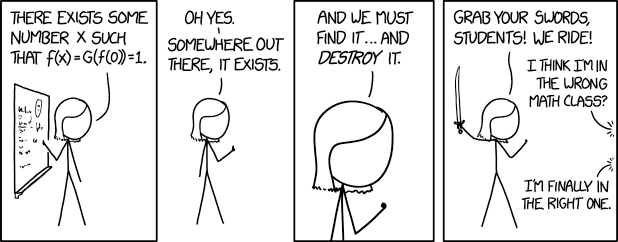
Рубить!

As I've recently been reading a lot of Babel, I just had to think that's how the Red Cavalry would have approached maths.
В последнее время я читал много Бабеля, и увидев это, я подумал что вот так конармия бы решила математические проблемы.


Ich habe in der letzten Zeit wohl zu viel Babel gelesen. Jedenfalls ist mir hierzu als erstes eingefallen, dass dies die Art sein muss, wie die Reiterarmee mathematische Probleme löst.

Freitag, 25. September 2015

Colours of the Past

A great post at Poemas del Río Wang about colour photos shot by Sergey Mikhaylovich Prokudin-Gorsky in imperial Russia before the First World War. I didn't know that colour photgraphy did even exist back then, all I had seen from that period were originally black-and-white photographs that have been coloured by hand. These photographs make the time look so much nearer and closer! Thinking of that period, I would normally have Sepia toned images in my head, or maybe simple black-and white, but these photographs have the look and feel of photographs taken in the 1950 or 60s, like the slides of trips across Germany and Italy that my father used to show to us.
The surviving collection can be found at the U.S. library of congress.

Freitag, 17. Juli 2015

Evgenij Primakov R.I.P

I'm sure nobody is getting their news from my almost-never updating blog, but as I've reviewed one of his books, I may as well report on his death, on June 29th, 2015. Here's a link to his obituary at the Economist, which sums up his life quite well. Да будет земля ему пухом.

Donnerstag, 17. Januar 2008

Gute Besserung!

Sometimes, doing term papers is good for something - back during my Slavistic studies, I had to do one on a collection of short stories by Vassiliy Aksyonov, and since then I love his works and his style.
So I'm sad to see that he's been hospitalised after a stroke - I wish him a full and speedy recovery!
Meanwhile, if you know Russian, you can read his Alternative History novel "Остров Крым" ("The Island Of Crimea") online.

Иногда сочиняешь семинарные работы не зря - давным-давно, когда я учился славистике, мне задавали писать об одном сборнике рассказов Вассилия Аксёнова, и с тех пор я - поклонник его творчества.
Поэтому мне очень грустно узнавать, что он попал в больницу; желаю ему скорейшего выздоровления!
Может быть, это повод перечитать "Остров Крым"?

Dienstag, 11. Dezember 2007

Putin continued / Путин - продолжнение

Things move quickly - so it looks like it will be variant 2)?
If you want more from me on Russia, go to this board - it belongs to a blog that you ought to read if you don't just want to sit and wait for history to happen, but want some intelligent guesses at what the next millennium or so will bring.

Кажется, всё уже решено, и Рутин станет премьером, а не Белорусско-Российским президентом? А жаль, мне эта идея нравилась...
Здесь обсуждают не только Московскую политику, а также главные черты настоящего и даже будущего.

Montag, 10. Dezember 2007

How Putin can become president again - Как Путин опять сможет стать президентом

Everybody and their dog is speculating about how Putin will remain in power after his presidential term expires. He consistently has ruled out a third term, for which the Russian constitution would have to be changed. The main versions currently discussed by the pundits are:
1) Despite what he's saying, he will have the constitution changed if he's asked enough by the masses (I think this can be finally ruled out now that he's announced his support for Medvedev becoming his successor)
2) He'll become Prime Minister and either have the constitution changed to move power from the office of president to that of prime minister or have his successor step down in favour of himself after a fig leaf period, technically avoiding a third consecutive term.
3) He'll rule from behind the scenes, maybe taking over the management of an influential company like Gazprom.

The snag of both 2) and 3) is that he has to rely on his sucessor to adhere to whatever agreement was struck in advance and not to stab Putin in the back as soon as he passes on the keys of the Kremlin.

So, today I read something that made me think that Putin may consider a different option:

BELARUS DENIES REPORTS THAT UNION STATE CONSTITUTION WILL BE SIGNED SOON.
Pavel Lyohki, a spokesman for President Lukashenka, on December 7 denied media reports that Lukashenka and Russian President Vladimir Putin will sign the Constitutional Act of the Belarusian-Russian Union State during their mid-December meeting in Minsk, Belapan reported. Lyohki's statement contradicts reports aired by Russia's Ekho Moskvy radio that the presidents will soon sign the Constitutional Act. "This obscure information came as a surprise to Belarus," Lyohki said. "Since it appeared in the Russian media, I advise you to approach the Russian side for comment," he added. Pavel Borodin, Russia's state secretary for the Belarusian-Russian Union State, earlier said that the meeting between Lukashenka and Putin will focus on a draft of a Constitutional Act for the proposed union state.

In the twilight years of the Yeltsin administration, Belarussian president Lukashenko promoted the Belorussian-Russian Union; not only to save his economically declining country from bankruptcy, but also with the ambition to become Russian president by stealth. Putin never was a fan of this Union, although the Kremlin kept paying lip service to the Union as a final goal, and some Union institutions exist, largely unnoticed by the world.
So any movement here could be an indicator that Putin took a leaf out of Lukashenko's script - becoming Russian president again through the backdoor of the Union presidency.
After this idea came to me, I googled a bit and found a denial distributed by RIA - so if there's smoke, there may as well be a fire?

----

Вкратце (предполагаю, что вы все знаете версии насчёт того, как В. В. сможет оставаться у власти, "от и до"), я прочитал вышеуказанную заметку и думал - может быть, он пойдёт другим путём? У Александра Григорьевича с этим вариантом в своё время не получилось, но Путин, конечно, это - другое дело.
РИА уже отвергает этот вариант - значит, не один я набрел на эту мысль...

Dienstag, 27. November 2007

Primakov & King Hussein

In my Primakov review I noted:
I was surprised about his positive assessment of Binyamin Netanyahu and his negative assessment of Shimon Peres, as this is the opposite one would have expected from a Soviet / Russian diplomat based on their political positions.

Now I find in an Economist review of a biography of the late Jordanian King Hussein that he had a similar assessment of these politicians:

Mr Shlaim concedes that the king was occasionally naive and impulsive, and could put too much store on personality and too little on ideology. On this score, his most grievous misjudgments were briefly to prefer the right-wing Israeli leader Binyamin Netanyahu, whom he seemed to back (perhaps even tipping the scales) against Shimon Peres, whom he did not trust, in the Israeli election of 1996;

As Primakov claims to have counted himself a friend of King Hussein, that similarity may not be accidental. It would be interesting to know who influenced whose opinion in that matter.

Samstag, 24. November 2007

Review of Evgenij Primakov, "Konfidendencial'no: Blizhnij Vostok na scene i za kulisami"

In different roles - as journalist, intelligence agent, and on diplomatic missions for the Soviet Union, as foreign minister and prime minister for the Russian Federation -, Evgenij Primakov has observed and participated in shaping Middle East politics over forty years. In the reviewed book, the title of which in translation means "Confidential: The Middle East on stage and behind the scenes", the author shares some of this experience with the reader.
It is not a history of the Middle East or of individual problems. The book is a collection of sketches on factors, problems, players, and events, like Arab Socialist Nationalism, the Arab-Israeli conflict, the Soviet and American strategies in the region, the Lebanese Civil war, Arafat, Saddam Hussein, the Iraqi Kurds, nuclear weapons in the region.
None of these sketches aspire to present a full picture. Besides giving a short historical background, they heavily concentrate on the diplomatic background, especially the backdrop of the US-Soviet rivalry, on the Soviet involvement and positions in individual countries and conflicts, and on the activities of the author. Quite often the author skips a decade or two during which he was not involved and finishes the sketch with an assessment of the current situation, which therefore frequently comes a bit out of the blue, as readers must understand what happened in the meantime from a few sentences or supplement it from their own knowledge of the events.
As anybody who has observed Primakov would expect, the author shows all signs of having grown up and lived in the USSR as a loyal citizen. His terminology is still communist - he uses terms like "left deviation" or "petty-bourgeois revolutionary" without irony, "progressive" means "communist" or "socialist", Arab countries are labelled democracies if the local communist party is in power or at least allowed to be active.
But his communism seems more a case of habit than of ideological conviction. Overall, Primakov is a pragmatist who serves his country - first the USSR, now Russia. In this, he has made the transition to post-communist derzhavnik like many other Russians of his generation.
For that reason, one shouldn't expect too many surprises in this book. The author is still sometimes employed in diplomatic missions in the Middle East, and therefore he is not writing anything that could harm Russia's position in the region. A few bureaucratic scores are settled in the book, e.g. with a circle of people around Podgornyj, who didn't want to recognise that Sadat was turning Egypt from a Soviet client into an American client, but that considers cases at least thirty years ago that have no bearing on contemporary positions any more. Primakov also criticises those in the Soviet Union that wanted to work with the local communist parties to set up local client regimes; again, as the Arab communist parties were a failure almost everywhere, as no Communist regime was ever successfully established except in Southern Yemen, and as the communists were rivals to the Socialist Nationalists that became the usual allies of the USSR in the Arab world, this is not a terribly surprising or controversial point.
As I'm not a specialist on Middle East or on Soviet politics, it is hard for me to assess how much in this book is really new. The materials on the secret diplomatic contacts between the USSR and Israel in the seventies, when officially no diplomatic relations existed between these countries, seem certainly interesting, especially as Primakov, being the emissary, speaks from first-hand experience. At least for me the author's assessment of the Yom Kippur war - that Sadat was goaded into it by the Americans who wanted to improve his position in preparation for the later separate peace with Israel (and who were not amused when the Israelis tripped up their scheme by winning again) - was something I hadn't heard of before, which probably only shows how little I've read on that topic. Primakov's assessment of Saddam Hussein - that he believed until the last moments of his life that the Americans only wanted to teach him lessons, but would always leave him in (or, after his fall, put him back into) power because they needed a strong Iraq led by him as a counterweight to Iran - would explain a lot about his constant brinkmanship, and also would show how far from reality his mind had strayed. On the level of personalities, I was surprised about his positive assessment of Binyamin Netanyahu and his negative assessment of Shimon Peres, as this is the opposite one would have expected from a Soviet / Russian diplomat based on their political positions.
The book is interesting on several levels. It allows some insights into the debates going on inside Soviet foreign policy circles in the sixties to eighties. It shows the continuities between the Soviet and the Russian foreign policy approach in the Middle East. And there are many small stories and anecdotes from Primakov's personal experience that make the book more than a dry political treatise.

---
Евгений Примаков, "Конфиденциально: Ближний Восток на сцене и за кулисами", Москва, "Российская Газета", 2006